

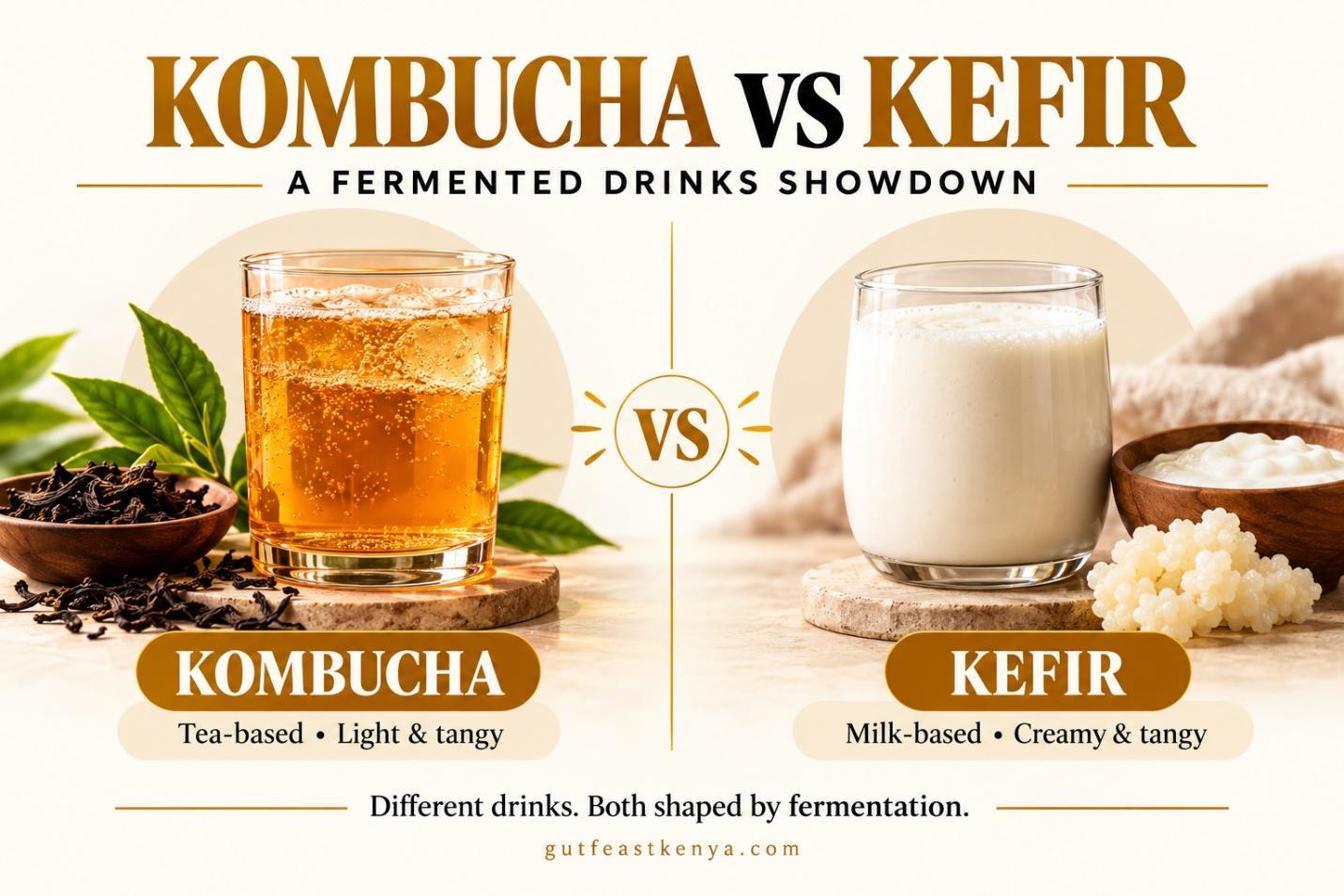
Kombucha is a fizzy, tangy drink brewed from tea, while kefir is a thick, tangy drink made by fermenting milk with kefir grains. Both are fermented drinks that contain live cultures when they’re unpasteurised. Choose kombucha for a light, fizzy sip with no milk, and kefir if you enjoy a creamy, yoghurt-style drink.
It’s a hot Saturday, the nyama choma is on its way, and you want something cold and tangy to sip. Two fermented drinks keep coming up: kombucha and kefir.
Here’s what each one is, how they differ and how to choose.
Kombucha vs Kefir: Side-by-Side Comparison
The main differences are the base, the culture and the texture.
| Kombucha | Kefir | |
| Made from | Sweetened tea | Milk, or sugar water for water kefir |
| Culture | Bacteria and yeast | Kefir grains |
| Taste and texture | Fizzy, light and tangy | Thick, creamy and tangy (milk kefir) |
| Contains milk? | No | Yes for milk kefir, though it’s low in lactose |
| Lovely with | Lunch, nyama choma, fries | Breakfast, fruit, oats |
What Is Kombucha?
Kombucha tea is a fermented drink made from tea, sugar and a living mix of bacteria and yeast. It usually ferments for anywhere from a week to a month. The result is lightly fizzy, with a tangy, slightly vinegary bite (Cleveland Clinic).
The fermentation does more than create flavour. It produces organic acids, and dietitians at Cleveland Clinic note that it also raises the polyphenols, the plant compounds found in tea. Like other fermented foods, kombucha can also bring probiotics to your gut.
Like every fermented drink, it carries a trace of alcohol, typically below 0.5%. That’s why traditional kombucha can be sold as a non-alcoholic beverage.
Dr Kombucha is Gut Feast Kenya’s kombucha, and it comes in four flavours. It’s naturally fermented and unpasteurised, so the live cultures stay alive, and it’s low in sugar with no added preservatives. That matters because sweetness varies a lot between brands, and Cleveland Clinic dietitians suggest choosing lower-sugar options.
When you shop for any kombucha, read the label. Look for “unpasteurised” and check the added sugar. Four grams of added sugar equals about one teaspoon.
What Is Kefir?
Kefir is a fermented milk drink, and if you grew up on mursik or maziwa lala, the idea won’t feel strange. It’s made by adding kefir grains, a bit like a sourdough starter, to cow, goat or sheep milk (Cleveland Clinic). The yeast and bacteria in the grains turn lactose into lactic acid, giving kefir its sour, yoghurt-like taste.
Kefir carries a wide range of microbes. Cleveland Clinic’s dietitian says it contains more probiotic strains and beneficial yeast than yoghurt, with around 12 active strains. Because fermentation breaks down most of the lactose, many people with lactose intolerance can drink it comfortably.
Flavoured kefir can be high in sugar, so plain is the easiest place to start. It works best in smoothies and overnight oats.
There is also water kefir, made with water kefir grains in sugar water instead of milk. It gives a lighter drink with no dairy (WebMD). Our kefir and gut health article goes deeper.
How Do They Compare for Gut Health?
Kombucha and kefir belong to the same family as kimchi and sauerkraut: fermented foods for gut health. They can bring friendly bacteria to your gut microbiome, the community of microbes in your digestive tract. Whether those microbes are still alive depends on the label. Pasteurising uses heat, which kills them, so look for “unpasteurised.”
Neither drink replaces the basics. Fibre feeds the microbes already living in your gut, so pair either one with meals like sukuma wiki, githeri or beans.
Which Should You Choose?
There’s no wrong answer, only a better fit for your day.
- Avoiding dairy? Kombucha is brewed from tea, so it contains no milk.
- Love dairy but find lactose tricky? Plain milk kefir is low in lactose.
- Want a fizzy sip with lunch or nyama choma? Go for kombucha.
- Can’t decide? Alternate weeks. Variety is a gut-friendly habit.
What This Means for Your Plate
- Pour a small glass of kombucha with lunch or alongside nyama choma. Our Kombucha in Kenya guide has more serving ideas.
- Start small with either drink and see how you feel.
- Small daily habit: one small glass with lunch this week.
Key Takeaways
- Kombucha is tea-based and fizzy. Kefir is milk-based and creamy.
- Both are fermented drinks that can contain live cultures when unpasteurised.
- Water kefir grains make a dairy-free kefir.
- Small daily habits beat big one-off changes.
Curious about our range? Browse the Gut Feast Kenya shop.
Where to Buy Kombucha in Kenya
Gut Feast Kenya is based in Nairobi and delivers countrywide. Order our naturally fermented kombucha online, or contact us to arrange delivery to your town.
Frequently Asked Questions
Can I drink kombucha and kefir on the same day?
Yes. If you’re new to ferments, introduce one at a time in small servings. Then add the other once you know how you feel.
How much kombucha should I start with?
Start small. The CDC says about 4 ounces (120 ml) a day may not cause adverse effects in healthy people (Cleveland Clinic). Increase slowly if you feel fine.
What are water kefir grains?
They’re a living culture that ferments sugar water instead of milk. The result is a lighter kefir with no dairy.
Do pasteurised versions still have live cultures?
No. Heat kills live microorganisms, so choose unpasteurised drinks if you want live cultures. Pasteurized drinks generally won’t retain their original live cultures unless live cultures are added after pasteurization.
Sources
- Cleveland Clinic: Is Kombucha Good for You?
- Cleveland Clinic: Is Kefir Good for You?
- WebMD: What Is Kefir?
Fermented foods suit most people, but check with your doctor if you are pregnant, immunocompromised, taking an MAOI antidepressant or managing a health condition such as high blood pressure.