
| Kombucha is a naturally fermented tea made by fermenting sweetened tea with a SCOBY, a living culture of bacteria and yeasts. The fermentation produces organic acids and other compounds that give kombucha its characteristic tang and gentle fizz. This tea is a source of live microorganisms and studies have identified compounds produced during fermentation that may contribute to its potential antioxidant and other health benefits. |
Kombucha has a long history in various parts of the world, but it has found a home in Kenya. Why? Fermentation has been part of our food culture for generations, using it to transform everyday ingredients into foods and drinks with new flavours, textures and qualities.
Kombucha brings the same idea to tea: give microorganisms the right environment, let fermentation do its work, and you get a completely different drink. Today, Kenyan kombucha makers are putting their own spin on it, using local ingredients and familiar flavours to make the drink their own.
What Is Kombucha?
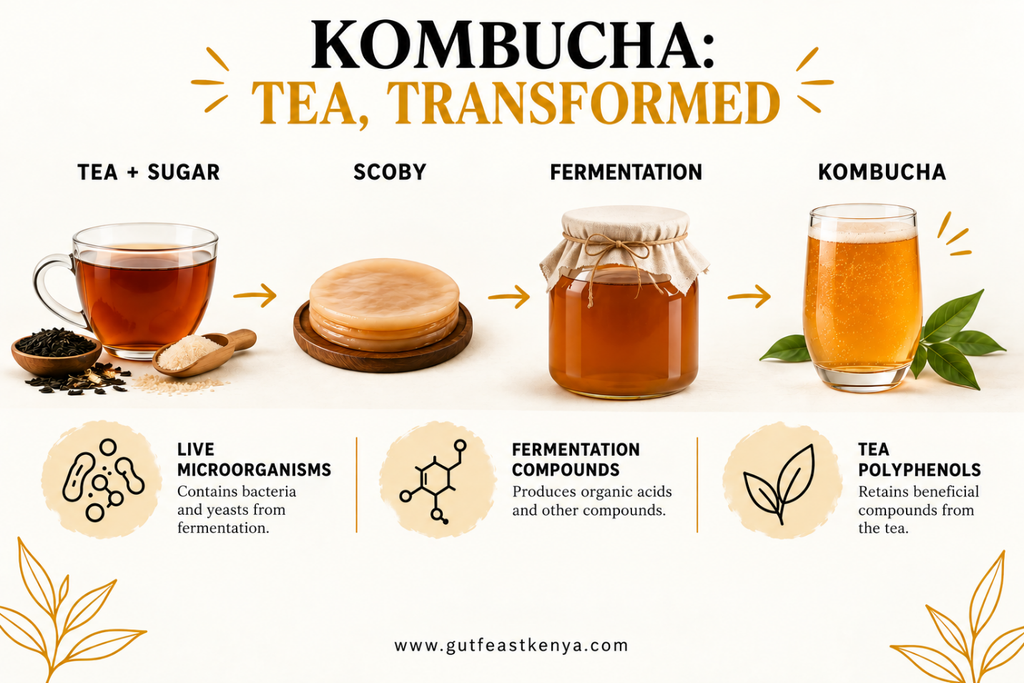
Kombucha is a fermented tea made from tea, sugar and a SCOBY. The SCOBY (symbiotic culture of bacteria and yeasts) is what drives the fermentation. The microorganisms feed on the sugars in the tea and produce organic acids, gases and other fermentation products. That is what gives it a slightly sour taste and natural fizz.
The result is not quite tea, not quite juice and definitely not soda. It’s kombucha.
What Does It Taste Like?
It’s usually tangy, lightly acidic and gently fizzy. The flavour changes depending on the tea, fermentation process and ingredients added afterwards. Herbs, spices, fruits and other natural flavourings can give it a completely different character.
How Is It Made?
Kombucha starts with brewed tea. The brewer adds sugar to the tea, lets it cool, then adds the SCOBY and starter liquid. The mixture then ferments under controlled conditions.
During fermentation, the bacteria and yeasts transform the sugars and tea components, producing the acids and other compounds that result in its distinctive flavour.
The basic process looks like this:
Tea + Sugar → SCOBY → Fermentation → Tangy, Fizzy Kombucha
The details matter. Temperature, fermentation time, tea type and other processing conditions can all affect the final drink, so it’s important to understand and control the process.
What Are the Potential Benefits of Kombucha?
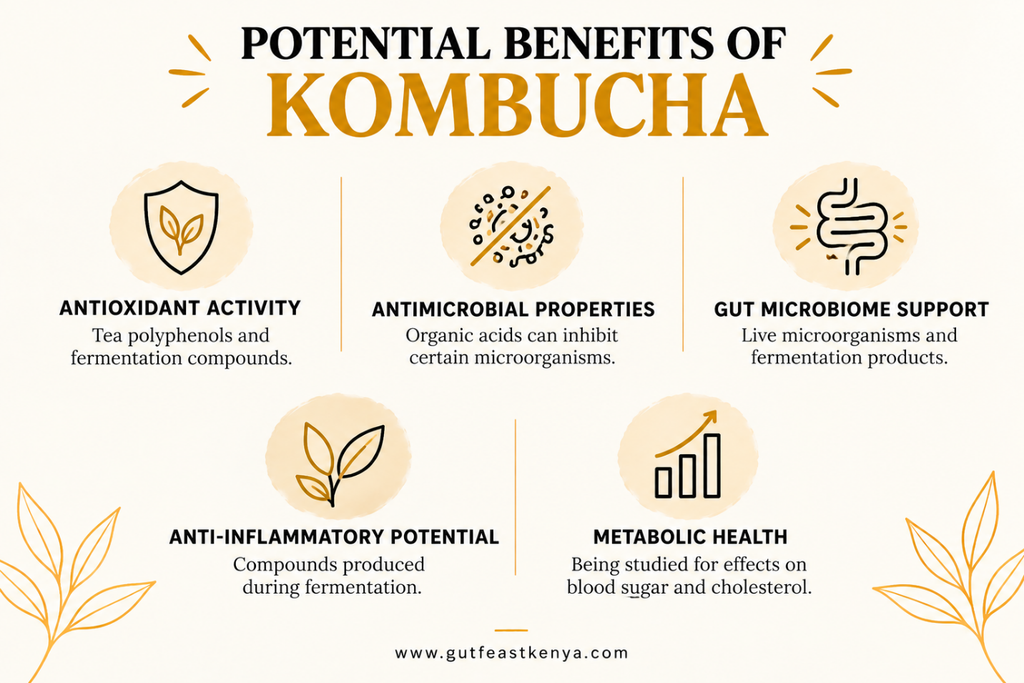
Research has identified several potential benefits from this fermented tea:
- Antioxidant activity: It contains tea polyphenols and other compounds that can help protect cells from oxidative stress.
- Antimicrobial properties: The organic acids and other compounds produced during fermentation can inhibit the growth of certain harmful microorganisms.
- Gut microbiome support: It contains microorganisms and fermentation products that may interact with the gut microbiota, making it an interesting addition to a varied diet.
- Anti-inflammatory potential: Some studies have found anti-inflammatory activity associated with the tea and its fermentation products.
- Metabolic health: Research is exploring its potential effects on blood sugar, cholesterol and other aspects of metabolic health, although stronger human evidence is still needed.
How to Enjoy Kombucha
The drink is refreshing straight from the fridge, but you can also make it part of meals, snacks or your afternoon drink.
- Drink it chilled for a refreshing alternative to sugary soft drinks.
- Enjoy it with a meal when you want something tangy and light.
- Use it as a mixer with fresh fruit or herbs for a simple mocktail.
- Start small if you’re new to kombucha and let your body get used to it.
Dr Kombucha: Our Take on Kombucha in Kenya
Gut Feast Kenya’s Dr Kombucha is naturally fermented, unpasteurised and made without added preservatives. We keep a raw, unflavoured option for people who want kombucha in its simplest form, alongside naturally flavoured varieties made with herbs and spices.
Our current range includes four different varieties, each with distinct character from herbs and spices like star anise, lime, ginger, hibiscus and clove. We make fermentation something you enjoy, not something you have to force yourself to drink because it’s “good for you.”
Where to Buy Kombucha in Kenya
If you’re looking to buy kombucha in Kenya, you can order Dr Kombucha directly from Gut Feast Kenya. Our kombucha is available in 1-litre and 5-litre sizes, with the different varieties available through our online shop.
Key Takeaways
Tea, sugar and a SCOBY work together to produce the tangy, lightly fizzy drink.
Fermentation transforms the tea and sugar, producing organic acids and other compounds.
It can be part of a varied gut-friendly diet. It is one way to include fermented foods and drinks alongside fibre-rich foods and other fermented options.
Plain kombucha keeps things simple, while herbs and spices can add completely different flavours.
Our kombucha is naturally fermented, unpasteurised and made without added preservatives.
Bringing Fermentation to the Kenyan Table
Kenyan food culture has always had a relationship with fermentation. We’ve fermented milk, cereals and other foods for generations. Kombucha gives us another way to enjoy the process, this time in a refreshing glass of tea.
That’s what we love about fermentation. It connects what we already know about food with what we’re still learning about the gut.
Ready to give it a try? Talk to us or shop Dr Kombucha online.
Frequently Asked Questions
What Is Kombucha?
Kombucha is a fermented tea made by fermenting sweetened tea with a SCOBY, a symbiotic culture of bacteria and yeasts. The process produces the tangy flavour, acidity and natural fizz associated with kombucha.
How Do You Drink It?
The simplest way to drink this fermented tea is chilled and straight from the bottle or glass. You can also enjoy it with meals or use it as a base for simple non-alcoholic drinks.
Is It Good for Gut Health?
Well-prepared kombucha can be a great addition to a gut-friendly diet. Its fermentation process produces organic acids and other compounds, while the drink can also contain live microorganisms that interact with the gut microbiota.
Does It Contain Probiotics?
Yes. Kombucha contains live microorganisms, including bacteria and yeasts, as a result of fermentation. Some of these microorganisms can have probiotic properties, although the specific microorganisms present can vary depending on the tea, SCOBY and fermentation process.
How Much Should You Drink?
If you’re new to kombucha, start with a small serving and see how you respond. We recommend 200 ml a day for adults as a starting point.
Is Dr Kombucha Pasteurised?
No. Dr Kombucha is unpasteurised, so it retains the live microorganisms and characteristics of a raw, naturally fermented drink.