
| Gut microbiota is the complex community of trillions of bacteria, viruses, fungi and other microorganisms living in your gastrointestinal tract. Together, they help digest parts of the food you eat, interact with your immune system and produce compounds that influence your health. Your gut microbiome refers to the microorganisms and their genetic material, although the two terms are often used interchangeably. What you eat can influence this microscopic community. |
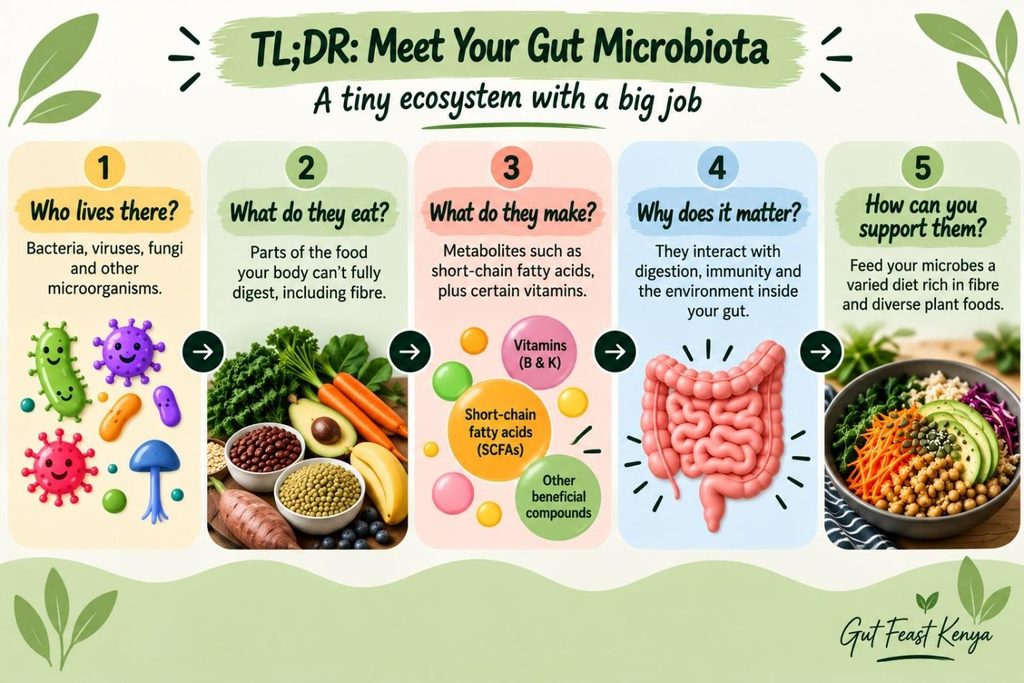
Alt text: Infographic explaining the microorganisms in the gut, what they eat, what they produce and why they matter for health.
Your intestines are home to trillions of microorganisms. Bacteria are the most common, but they share this microscopic neighbourhood with viruses, fungi and other organisms, including protozoa. Together, these microorganisms make up your gut microbiota.
You may also hear the term gut microbiome. Technically, the microbiome refers to the genetic material associated with the microbial community. In everyday health conversations, however, the two terms are often used interchangeably.
What Does Your Gut Microbiome Actually Do?
Your gut microbes have several jobs that contribute to how your body functions. Some of their important roles include:
- Helping digest food: Certain microbes break down components such as dietary fibre that your own digestive system cannot fully digest.
- Producing useful compounds: When microbes ferment fibre, they produce metabolites such as short-chain fatty acids (SCFAs), which are involved in processes affecting the gut and the wider body.
- Supporting vitamin production: Gut microbes can contribute to the production of certain B vitamins and vitamin K.
- Interacting with your immune system: The microbial community plays a role in the development and regulation of immune responses.
- Helping defend your gut: Beneficial microbial communities can help create an environment that makes it harder for some harmful microorganisms to take hold.
Fibre Is a Big Deal
Your body cannot digest dietary fibre on its own. Certain gut microbes can, however, ferment different types of fibre and turn them into metabolites such as SCFAs.
Some types of fibre and other substances that selectively feed beneficial gut microbes are known as prebiotics. Think of them as food for the microbes that can use them to grown and function. (Learn more about prebiotics and how they differ from probiotics.)
These compounds are involved in several aspects of health, including the gut environment, immune function and metabolic processes.
So that plate of beans, vegetables, fruit or whole grains isn’t just feeding you. Some of it is feeding the microbes that live with you, too.
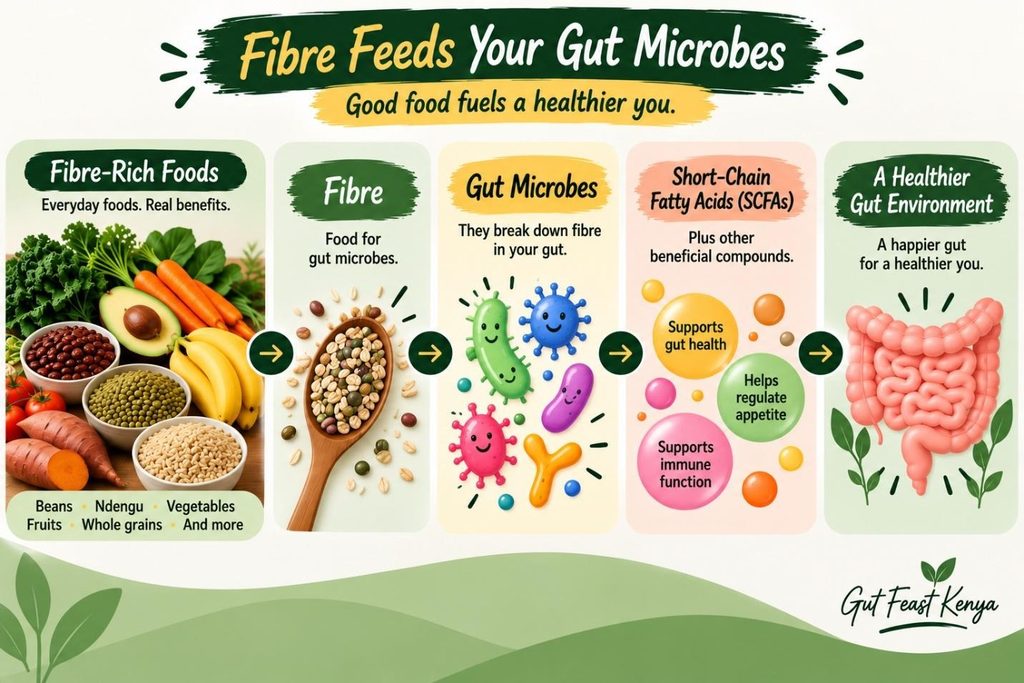
Alt text: Illustration showing fibre-rich foods such as beans, vegetables and whole grains being used by gut microbes to produce beneficial metabolites.
Why Does Your Gut Microbiome Matter for Your Health?
Your digestive tract interacts with your immune system, metabolism and nervous system. The microorganisms living there produce substances that can affect the environment around them.
That means what’s happening in your gut doesn’t necessarily stay in your gut. The microbes living there are part of a much bigger conversation between your digestive system and the rest of your body.
The nutrients and fibre you eat help shape the environment your gut microbes live in, which is why variety matters. Different microbes use different nutrients, so eating a diverse range of plant foods gives your microbial community more to work with.
How Do You Feed Your Gut Microbes?
Start with the foods you already know. Beans and ndengu. Sukuma wiki and other vegetables. Fruits. Whole grains. Nuts and seeds. These provide fibre and other compounds that different microbes can use.
You can also add fermented foods to a varied diet. Kimchi, sauerkraut, kombucha, and yoghurt can introduce different microorganisms and fermentation-derived compounds into your diet. The key is variety. Your gut is an ecosystem, and ecosystems thrive on diversity.
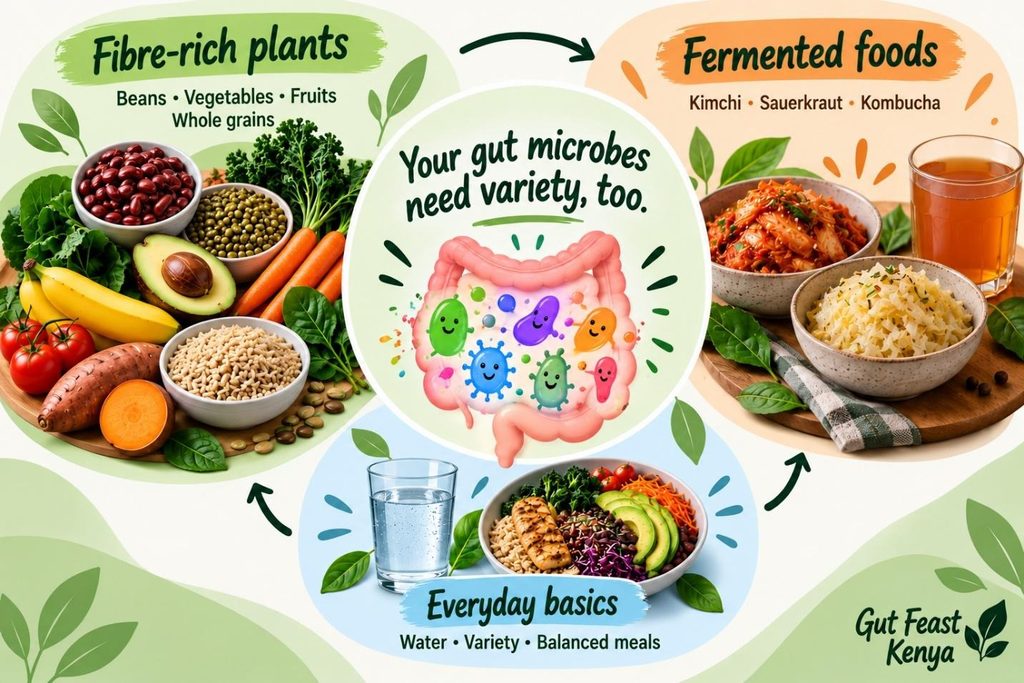
Alt text: Illustration showing fibre-rich foods and fermented foods as part of a varied diet that supports the gut microbial community.
Key Takeaways
- Your gut is an ecosystem: Trillions of microorganisms live in your digestive tract, including bacteria, viruses and fungi.
- Food matters: What you eat influences the nutrients and fibres available to your microbes.
- Your microbes do useful work: They help process fibre and produce metabolites that interact with your body.
- Variety is valuable: A diverse diet gives different microbes different things to work with.
- Ferments are one piece of the puzzle: Fermented foods can complement a varied, fibre-rich diet.
Take Care of Your Gut from the Inside
Your gut is home to a microscopic community working alongside you every day. It deserves a little attention.
You don’t need to overhaul your diet to start. Small, everyday choices in what you eat can help you create a better environment for your gut microbes.
To add more naturally fermented foods to your meals, talk to us or shop online.
Frequently Asked Questions
What is gut microbiota?
It is the community of microorganisms living in your gastrointestinal tract. These include bacteria, viruses, fungi and other microscopic organisms.
What is the difference between gut microbiota and gut microbiome?
The terms are often used interchangeably. Technically, microbiota refers to the microorganisms themselves, while the microbiome refers to their collective genetic material and the environment associated with them.
How can I support my gut microbiome naturally?
Eating a varied diet rich in fibre-containing plant foods is a good place to start. Beans, vegetables, fruits, whole grains, nuts and seeds provide different nutrients and fibres that gut microbes can use. Fermented foods can also be included as part of a varied diet.
Are fermented foods the only way to support your gut?
No. Fermented foods are only one part of the picture. Overall dietary variety, particularly a good intake of fibre-rich plant foods, is important for supporting the microbial community in your gut.
Is everyone’s gut microbiome the same?
No. Each person’s microbial community is shaped by factors including diet, age, genetics and medications, among others.