
| Fermented foods such as traditional porridge, mursik and drinks like busaa have been part of Kenyan food culture for generations. Research suggests that microorganisms found in these foods can interact with our gut microbiota. Beneficial bacteria may also compete with harmful bacteria for nutrients and space, making it harder for some disease-causing microbes to thrive. These foods can be a great alternative to commercial probiotic supplements. |
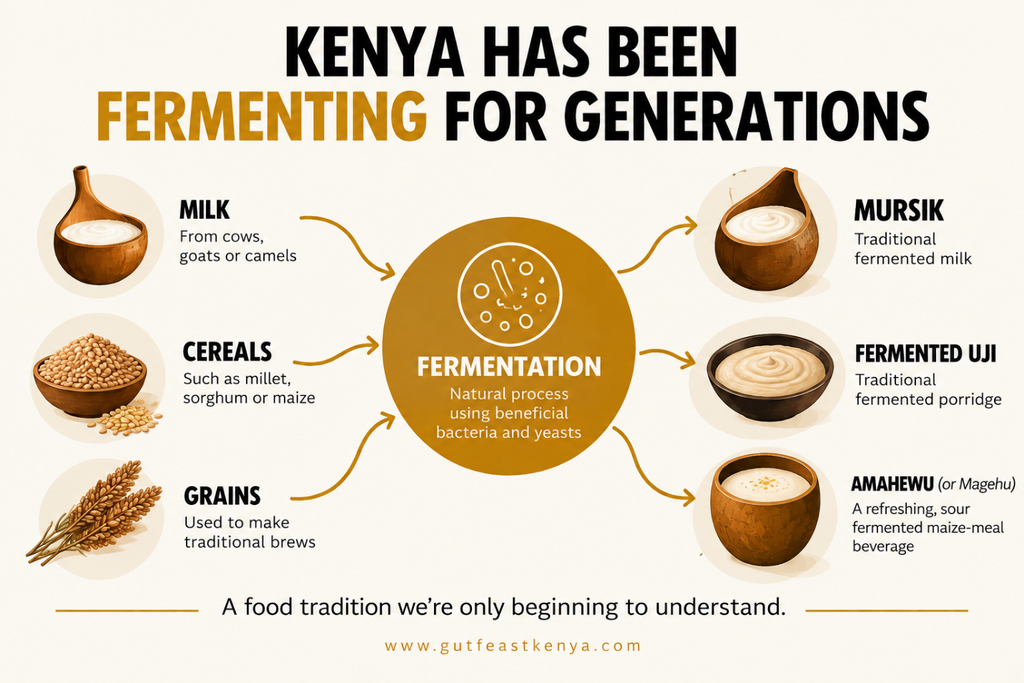
Before gut health became a wellness trend and fast-food chains became part of life, fermentation was already part of the way many African communities ate. Our food traditions may have more to teach us than we realise. Let’s see what we can learn from traditional fermented foods in Kenya:
What Are Fermented Foods?
Fermentation is one of the oldest ways of preserving and transforming food. It happens when microorganisms such as bacteria and yeasts break down components of food, changing its taste, texture, acidity and sometimes its nutritional properties.
In Kenya, fermentation has traditionally been used for foods made from milk, cereals and other locally available ingredients. Fermentation doesn’t just change the taste of food; it also changes the microorganisms present in it, creating an environment where different bacteria and yeasts can grow. Some of these microorganisms can be beneficial to us when we eat them.
Traditional Fermented Foods in Kenya
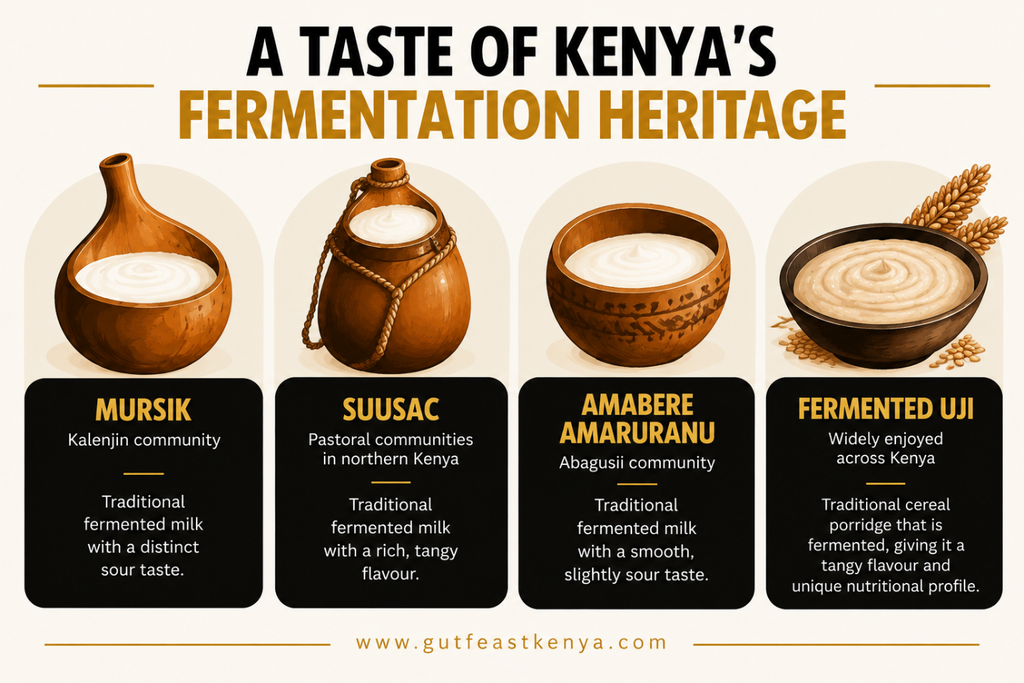
Kenya’s fermented foods vary across communities. Some of the better-known examples include:
Mursik
Mursik is traditionally fermented milk associated particularly with the Kalenjin community. The milk is fermented in a gourd (sotet), giving it its characteristic sour taste.
Researchers have isolated several lactic acid bacteria from mursik, including Lactobacillus plantarum, Lactobacillus fermentum and Lactobacillus brevis. Some of these showed antibacterial activity against pathogens in laboratory testing.
Suusac
Suusac is another traditional fermented milk product, associated mainly with pastoral communities in northern Kenya. Like other fermented milk products, its fermentation involves lactic acid bacteria and other microorganisms.
A 2024 review of Kenyan fermented foods highlights suusac alongside mursik as an important indigenous fermented milk product with potential nutritional and food-system value.
Amabere Amaruranu
Amabere amaruranu is traditionally fermented milk from the Abagusii community of southwestern Kenya. Studies have found a mixture of lactic acid bacteria and yeasts in the milk, including Streptococcus thermophilus, Lactobacillus plantarum and Leuconostoc mesenteroides.
Fermented Uji
Uji is one of Kenya’s most familiar foods, and fermentation adds another dimension to this simple staple. During fermentation, microorganisms break down some of the components in the cereal mixture. This can affect the porridge’s flavour, acidity and nutritional characteristics.
Kule-Naoto
Kule-naoto is a traditional fermented milk product associated with the Maasai community in Kenya and northern Tanzania. Traditionally made from whole milk and fermented in a specially prepared gourd, it contains a variety of lactic acid bacteria, including Lactobacillus and Lactococcus species.
What Kenyan Fermented Foods Can Teach Us About Gut Health
Here’s a look at our traditional ferments, everyday foods that can support our gut microbiome:
We Can Get Microbial Variety from Food
If you’ve been looking into probiotics for gut health, ferments are one way to introduce beneficial microorganisms through food. Fermented foods can contain different bacteria and yeasts, depending on what is being fermented and how the fermentation is carried out. Eating a variety of fermented foods can give us exposure to a wider range of microorganisms.
Fermented Foods Work Hand-in-Hand with Fiber
The microorganisms already living in your gut need the right food to thrive. Pairing ferments with fibre-rich foods gives you beneficial microorganisms and feeds your gut microbes.
Think of pairing fermented foods with the kinds of fibre-rich foods already common in Kenyan meals:
| Fermented Food | Pair It With | Why It Makes Sense |
|---|---|---|
| Mursik or other fermented milk | Whole grains, vegetables or legumes | Adds fermented food to a fibre-rich meal |
| Fermented uji | Fruit, nuts or seeds | Brings fibre and other nutrients to the meal |
| Kimchi or sauerkraut | Beans, whole grains or vegetables | Combines fermented foods with plant fibre |
Uphold Food Safety Standards
Traditional fermentation can produce valuable foods, but poorly controlled fermentation can also create food-safety problems. Research on Kenyan fermented foods has pointed to the need for better control of contamination and more consistent fermentation methods. So preserve the tradition, but don’t ignore hygiene, safe ingredients and proper preparation.
How to Include More Fermented Foods in Your Diet
Start with what fits naturally into the meals you already eat.
- Add a serving of fermented food to a meal rather than eating it on its own.
- Pair fermented foods with fibre-rich foods such as beans, lentils, whole grains, sukuma wiki, managu and other vegetables.
- If you’re new to fermented foods, start with small amounts and see how you respond.
- Choose fermented foods that have been prepared and stored safely.
Key Takeaways
Kenya has a rich fermentation tradition. Mursik, suusac, amabere amaruranu and fermented uji are just some examples.
Fermentation creates microbial diversity. Research has identified different bacteria and yeasts in several traditional Kenyan fermented foods.
Pairing fermented foods with fibre-rich plant foods gives your gut microbes something to work with.
Traditional food deserves a place in modern nutrition. We don’t have to abandon our food culture in the name of gut health. We can learn from it, uphold food safety and understand it better.
Keeping Our Food Culture Alive
Gut health is definitely having its moment, but fermentation is nothing new. Long before probiotic supplements appeared on supermarket shelves, Kenyan communities were fermenting milk, cereals and other foods using methods passed down through generations.
Modern research is helping us understand the microorganisms involved and the potential benefits of these foods. This means there is knowledge in our food traditions worth keeping, studying and bringing to the table.
Want to try a greater variety of fermented foods? Talk to us or shop Gut Feast Kenya online for delicious ferments including kimchi, sauerkraut and kombucha.
Frequently Asked Questions
What Traditional Ferments are Part of Kenya’s Food Culture?
Traditional fermented foods in Kenya include fermented milk products such as mursik, suusac and amabere amaruranu, as well as fermented cereal foods such as uji. Traditional fermented beverages such as busaa are also part of Kenya’s fermentation heritage.
Is Mursik a Probiotic Food?
Mursik contains microorganisms produced during fermentation, and studies have identified several lactic acid bacteria with probiotic potential in it.
Is Fermented Uji Good for Gut Health?
Fermented uji is a traditional cereal-based fermented food and one of Kenya’s important indigenous fermented foods. Fermentation changes the cereal mixture and its microbial and nutritional properties, and can be beneficial for gut health.
What Foods Should I Eat with Ferments?
Pair fermented foods with fibre-rich foods such as beans, lentils, whole grains, vegetables and fruits. Fibre provides food for the microorganisms already living in your gut, making it an important part of a varied diet.
Are All Fermented Foods Healthy?
No. Fermentation does not automatically make a food healthy. The ingredients, fermentation method, microorganisms involved, preparation, storage and portion all matter. Proper hygiene and food safety are especially important with traditionally fermented foods.