
| The best foods for digestion are a mix of fibre-rich whole grains, fruits and vegetables, prebiotic foods and fermented foods. Probiotic foods may also add beneficial live microorganisms to your diet and help maintain a healthy gut microbiota, depending on how they’re made and processed. Eating a diverse range of gut-friendly foods can be good for digestion and your gut health. |
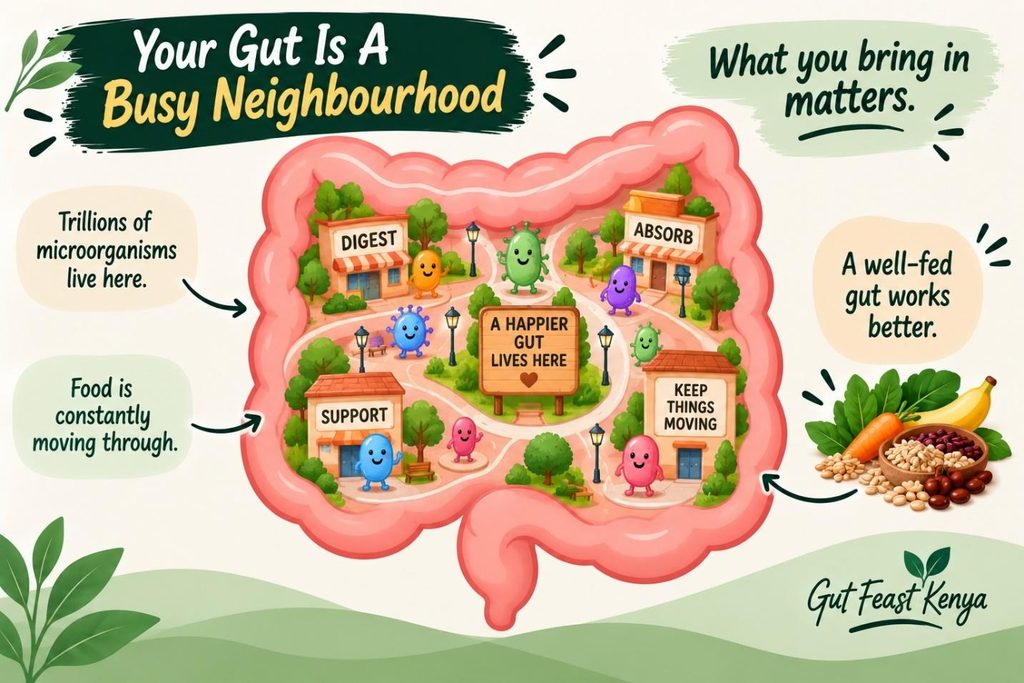
Alt Text: Illustration of the gut as a busy neighbourhood with microorganisms, digestion and food moving through.
Your gut is like a very busy neighbourhood. There are trillions of microorganisms living there, food is constantly moving through, and your digestive system has plenty of work to do.
Just like any neighbourhood, what you bring in matters. Foods that help with digestion can provide fibre, nutrients, prebiotic compounds and beneficial microorganisms that support the gut and the microbes that call it home. Let’s look at what happens when you give your gut a good mix of the right foods.
What Happens in the Gut Doesn’t Stay in the Gut
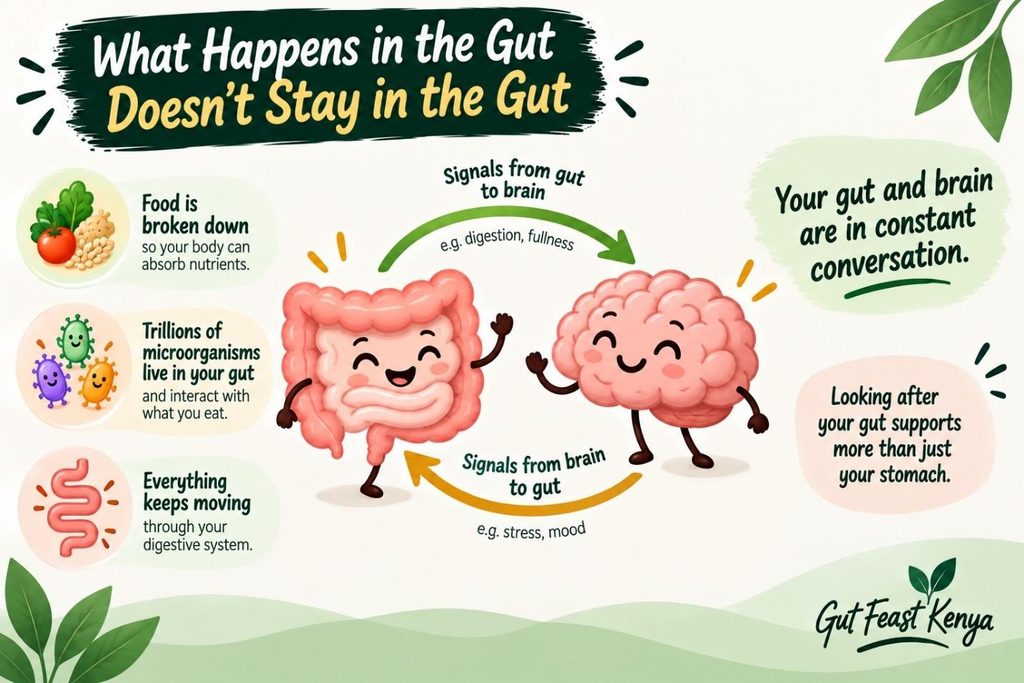
Alt Text: Infographic showing two-way communication between the gut and brain and its role in digestion.
When your digestive system is working well, your body can break down food, absorb the nutrients it needs and move everything along as it should. Your gut is home to trillions of microorganisms that interact with what you eat and with each other, influencing the environment they live in. And the conversation doesn’t stop at the gut.
Your gut and brain are constantly exchanging signals, with communication happening in both directions. Your brain can influence what happens in your gut, while signals from your digestive system can travel back to the brain.
Looking after your gut therefore means supporting a system that’s connected to much more than your stomach. That makes what you eat worth paying attention to.
Foods That Help with Digestion
A good mix of foods brings different things to the table:
Whole Grains
Oats, brown rice and other whole grains provide fibre that can support normal digestion and bowel regularity.
Fruits and Vegetables
Your gut likes variety, and fruits and vegetables bring plenty of it. Think bananas, apples, berries, oranges, carrots, broccoli, tomatoes, sweet potatoes and whatever else you enjoy. Sukuma wiki, spinach, kale and other leafy vegetables are also great ways to add fibre and nutrients to everyday meals.
Fibre-Rich Foods
Fibre deserves its own mention because it is one of the biggest players in digestive health. It helps add bulk to stool and can help keep things moving through the digestive tract. Some types are also fermented by gut microbes, producing compounds that support the gut environment.
Good sources include:
- Beans, ndengu, lentils and chickpeas
- Fruits and vegetables
- Whole grains, oats and other wholemeal foods
- Nuts and seeds
Prebiotic Foods
Prebiotic foods contain types of fibre and other compounds that beneficial gut microbes can use as fuel. Garlic, onions, leeks, asparagus, bananas, beans and whole grains are examples of foods that can provide prebiotic fibres.
Ferments and Probiotic Foods
Fermentation has been used for generations to transform and preserve food. But there’s another reason these foods have earned a place in the gut-health conversation: some fermented foods contain live microorganisms that may benefit the gut.
Kimchi, sauerkraut, kombucha, yoghurt and kefir are examples of fermented foods that can contain live microorganisms. When those microorganisms have been shown to provide a health benefit, the food can be considered a probiotic food.
Whether a particular fermented food contains probiotics depends on how it was made and whether processing, such as heating or pasteurisation, has destroyed the live cultures. Gut Feast Kenya’s ferments include raw, unpasteurized kombucha, kimchi and sauerkraut.
The Gut-Friendly Plate
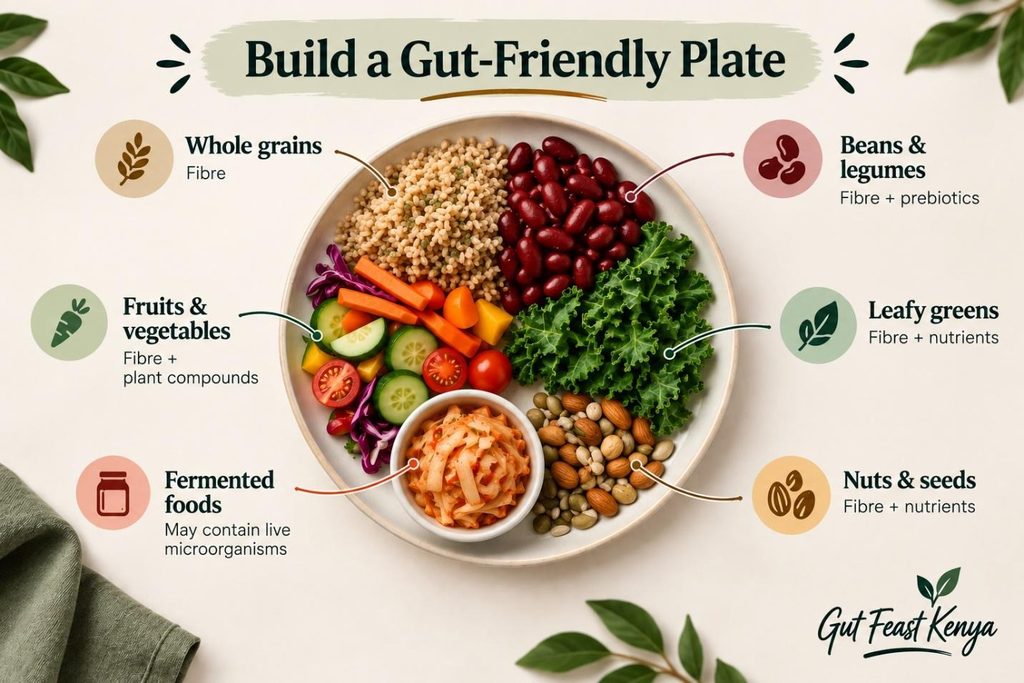
Alt Text: A gut-friendly plate showing a variety of foods that help with digestion.
Instead of asking, “Which food is best for digestion?”, try asking, “How much variety can I bring to this meal?”
Why Variety Matters
Your gut microbiome is an ecosystem, and ecosystems thrive on diversity. Different types of fibre feed different groups of gut microbes, which is one reason a varied diet matters more than repeatedly eating the same “superfood.”
Research also links diets rich in fibre and fermented foods with a healthier gut microbiome. So give your gut a broader selection and you’re giving different groups of microbes different types of fibre and other compounds to work with.
Key Takeaways
- Give your gut microbes different types of food to work with including probiotics and prebiotics.
- Whole grains, beans, fruits and vegetables provide plenty of fibre and are good for digestion.
- Fermented foods may provide probiotics for gut health, depending on how they’re made and processed.
- Think about the whole diet. No single food can carry the entire digestive-health workload.
Your Gut Is Paying Attention
Every meal is part of the conversation you’re having with your gut, whether you realise it or not. Start noticing what leaves you feeling comfortable, what doesn’t, and which foods you genuinely enjoy eating.
Good digestion starts with finding an eating pattern that works for you and your gut and our gut-friendly ferments are a great place to start. Shop online or talk to us on WhatsApp.
Frequently Asked Questions
What foods are good for digestion?
Fibre-rich foods such as whole grains, beans, fruits, vegetables and leafy greens are good choices for supporting digestion. Fermented foods can also be part of a gut-friendly diet.
What is the best food for digestion?
A varied diet containing fibre-rich plant foods, whole grains, legumes, fruits, vegetables and fermented foods gives your digestive system and gut microbiome a broader range of nutrients and fibres to work with.
Are fermented foods good for digestion?
Yes. Fermented foods can be part of a gut-friendly diet, and some contain live microorganisms that may support gut health. However, not every fermented food contains probiotics because processing can affect the live cultures.
What are prebiotic foods?
Prebiotic foods contain substances, often specific types of fibre, that beneficial microorganisms in your gut can use as fuel. Examples include garlic, onions, asparagus, bananas, beans and whole grains.
Can eating more fibre cause bloating?
It can, particularly if you increase your fibre intake suddenly. Increase fibre gradually and drink enough fluids to give your digestive system time to adjust.