
| Natural ways to reduce bloating include eating slowly, spacing out meals, staying hydrated and keeping active after eating. Limiting foods and drinks that can trigger gas or water retention may also help. Probiotic foods, along with herbs and spices such as anise and ginger, can support comfortable digestion and a healthy gut. If you have an underlying digestive condition, follow the dietary advice given by your healthcare provider. |
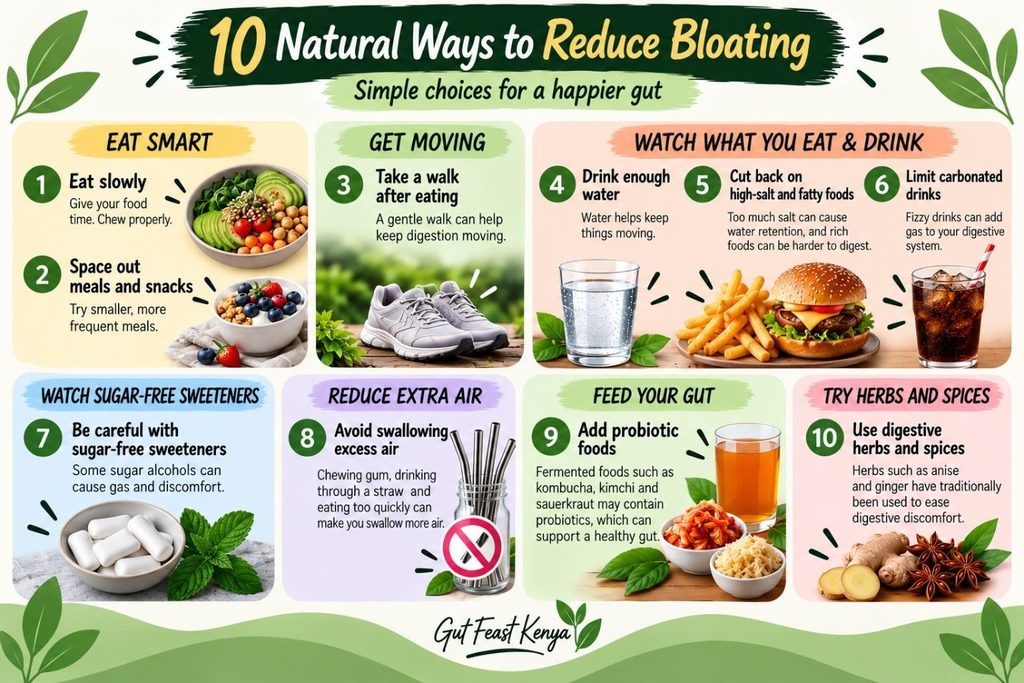
Alt text: Infographic showing 10 natural ways to reduce bloating
Bloating and gas are common digestive complaints, and sometimes the culprit is what we ate. Sometimes it’s how quickly we ate it, how much we ate, or how our digestive system responded.
These natural ways to reduce bloating are simple things you can try as part of your everyday routine.
What Is Bloating?
Bloating is the uncomfortable feeling of fullness, pressure or swelling in your abdomen. Gas in the digestive tract can contribute to that sensation, but bloating can have several possible causes.
The gut microbiome (the community of microorganisms living in your digestive tract) interacts with the foods you eat and plays an important role in digestive health. That means the way you eat, what you eat and how your digestive system responds can all influence how your stomach feels.
10 Natural Ways to Reduce Bloating and Gas
Here are some natural tips to reduce bloating:
Take Your Time Eating
Your lunch isn’t going anywhere. Slow down. Taking the time to chew your food properly gives your digestive system a chance to keep up.
Put down the fork between bites, chew properly, and try eating a meal without scrolling through your phone at the same time.
Space Out Your Meals and Snacks
Huge meals can leave you feeling uncomfortably full. If this happens to you regularly, try smaller meals and snacks spaced throughout the day instead of piling most of your food into one or two sittings. Smaller portions can be easier to digest and may help prevent that overly-full, bloated feeling.
Take a Walk after Eating
A walk after meals can get your body moving and support the normal movement of food and gas through the digestive tract. Even a short stroll around the block can be a better option than immediately sinking into the sofa.
Add Probiotic Foods to Your Diet
Your gut is home to trillions of microorganisms, and supporting a healthy and diverse gut microbiome is an important part of gut health. One way to add live microorganisms to your diet is through fermented foods and beverages.
These may contain probiotics, live microorganisms that can support gut health, but the cultures present depend on how the food or drink is made, processed and stored. You can learn more about probiotics and how they support gut health in our guide to probiotics for gut health.
At Gut Feast Kenya, our range of ferments includes raw, unpasteurized Dr Kombucha in a variety of flavours, as well as kimchi and sauerkraut. Start with what works for you.
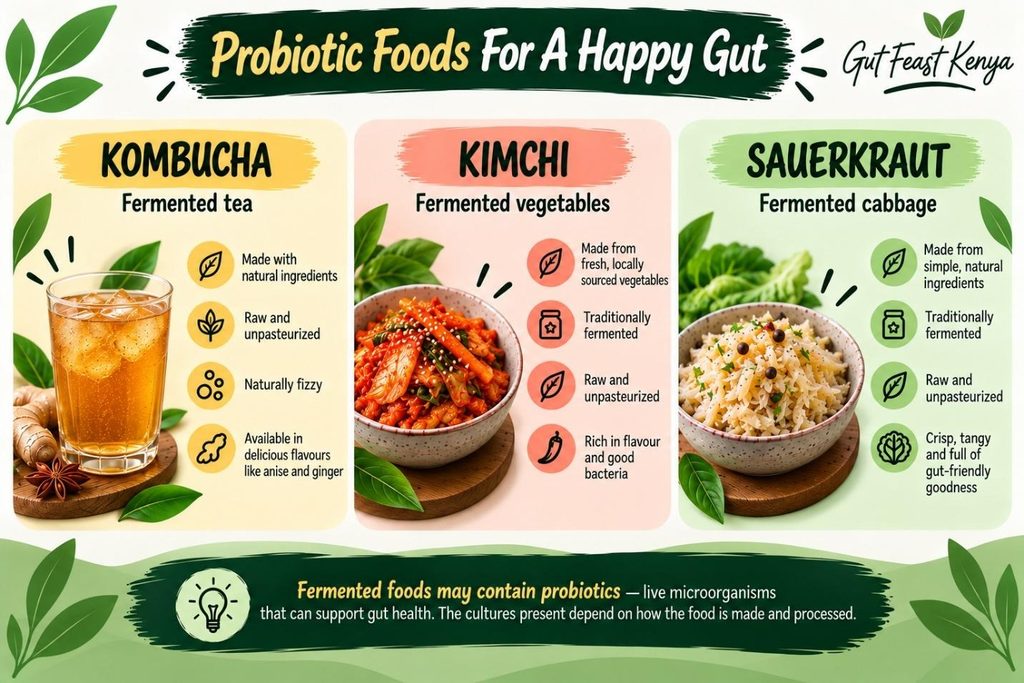
Alt text: Probiotic foods infographic featuring kombucha, kimchi and sauerkraut.
Cut Back on High-Salt and Fatty Foods
Ever eaten a very salty or rich meal and felt like you were carrying it around for the rest of the day?
Foods high in salt can contribute to water retention, while very fatty meals may take longer to digest and can leave you feeling overly full or uncomfortable.
If you notice a pattern, try lighter portions and less heavily salted or greasy meals.
| If you notice… | Try… |
| Feeling puffy after salty meals | Cut back on heavily salted foods |
| Discomfort after very rich meals | Try smaller portions and lighter preparations |
| Bloating after eating out | Pay attention to what you ate and how much |
Drink Enough Water and Go Easy on Carbonated Drinks
Water helps keep things moving through your digestive tract and supports softer stools, which can be particularly helpful if constipation is contributing to your discomfort.
On the other hand, carbonated drinks can add gas to your digestive system. If you’re already feeling bloated, you may want to swap that fizzy drink for good old-fashioned water.
Watch out for Sugar-Free Sweeteners
Some non-nutritive sweeteners, particularly sugar alcohols such as sorbitol, mannitol and xylitol, can cause gas and digestive discomfort in some people.
If you regularly feel bloated after sugar-free sweets, chewing gum or certain drinks, check the ingredient list. Your sweet tooth may have some explaining to do.
Try Not to Swallow So Much Air
Believe it or not, some of the gas making you uncomfortable may be air you’ve swallowed. Chewing gum, drinking through a straw, eating too quickly and smoking can all increase the amount of air you swallow.