
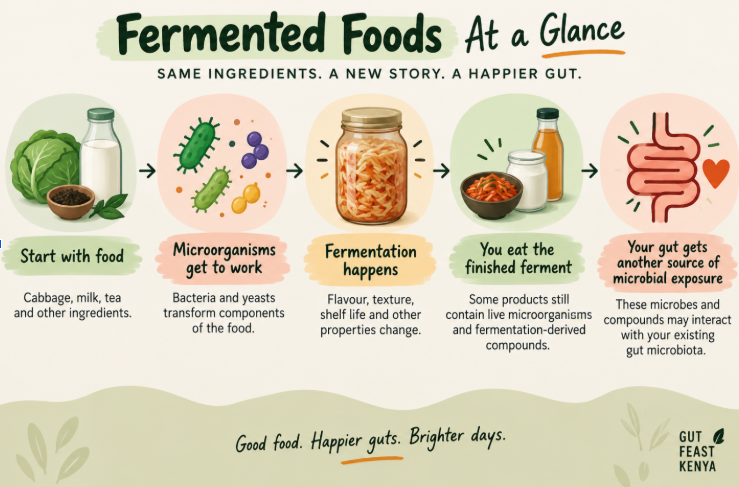
| Fermented foods are foods and drinks made through the controlled growth of microorganisms such as bacteria and yeasts. During fermentation, these microorganisms transform components of the food, changing its flavour, texture and other properties.Kimchi, sauerkraut, kombucha, yoghurt and kefir are familiar examples. Some fermented products contain live microbes and compounds, and research suggests that including them as part of a varied diet may influence the gut microbiota. |
Alt Text: Infographic showing how microorganisms transform food during fermentation and how fermented foods may support gut health.
Fermented foods have been part of human diets for thousands of years, long before anyone was talking about the gut microbiome. Today, they’re getting renewed attention as researchers explore how fermented foods, the live microorganisms they may contain, and the compounds produced during fermentation interact with our gut. So, what exactly happens during fermentation and what does it mean for your gut?
What Are Fermented Foods?
Fermentation happens when microorganisms such as bacteria and yeasts grow in food and transform its components through enzymatic activity. Depending on the type of fermentation, they can produce acids, gases or alcohol. The result is a food or drink with a different flavour, texture, aroma and shelf life from what you started with.
Fermenting fresh cabbage can give you sauerkraut. Season it differently and ferment it in the traditional way used to make kimchi, and you get something completely different again. Milk can become yoghurt or kefir. Sweetened tea can become kombucha.
While fermentation is enjoying plenty of attention in the wellness world today, there’s nothing particularly new about it. People have used fermentation for thousands of years to preserve food and create new flavours and textures.
How Fermentation Changes Food
During fermentation, microorganisms use components of food as fuel and produce new compounds in the process.
This can:
- Help preserve food by creating an environment that makes it harder for some unwanted microorganisms to thrive.
- Change the food’s flavour, aroma and texture.
- Alter some nutrients and other food components.
- Produce microbial metabolites that researchers are studying for their possible effects on health.
Alt text: Graphic showing how microorganisms transform cabbage into sauerkraut, milk into yoghurt or kefir, and tea into kombucha.
Gut Health Benefits of Fermented Foods
Fermented foods may offer several potential benefits for your gut, especially when they are included as part of a varied, fibre-rich diet.
They May Support a More Diverse Gut Microbiota
Some fermented foods contain live microorganisms that can add to the range of microbes you encounter through your diet. Research from Stanford found that people who increased their intake of fermented foods experienced greater gut microbiota diversity.
A more diverse gut microbiota is generally associated with better resilience and overall gut health, although fermented foods are only one factor that can influence it.
They May Help Support a Healthy Gut Environment
During fermentation, microorganisms produce compounds such as organic acids and other metabolites. These compounds can change the food’s flavour and texture, but they may also interact with the gut environment after you eat them.
Researchers are still studying exactly how these fermentation-derived compounds affect the gut.
They May Help Regulate Inflammatory Responses
In the same Stanford study, participants who ate more fermented foods showed reductions in several inflammatory markers. This suggests that regularly eating fermented foods may be one part of a dietary pattern that supports a healthier immune and inflammatory response.
They Add Live Microorganisms to Your Diet
Naturally fermented foods such as kimchi, sauerkraut and some types of yoghurt may contain live microorganisms when you eat them. These microorganisms can contribute to the variety of microbial exposure in your diet.
Fermentation Can Make Some Foods Easier to Digest
Fermentation partially breaks down certain components of food. Depending on the food and the type of fermentation, this may make it easier for some people to digest than the original ingredient.
For example, fermentation can reduce some lactose in dairy products and alter other compounds in foods such as cabbage and beans. Individual responses vary, so it is worth paying attention to how your body responds.
They Can Complement Fibre-Rich Foods
Fermented foods work best alongside foods that feed beneficial gut microbes. Vegetables, fruits, beans, whole grains, nuts and seeds provide fibre and other substrates that gut microorganisms can use.
They May Support Digestive Wellbeing
By contributing live microorganisms, fermentation-derived compounds and more variety to your diet, fermented foods may support overall digestive wellbeing.
Some people may experience bloating or discomfort when they first introduce fermented foods, particularly if they eat large amounts. Starting with small portions and increasing gradually may be more comfortable.
Fermented Food, Probiotic, Prebiotic or Postbiotic?
You’ve probably seen fermented foods described as probiotic foods or heard people talk about feeding the “good bacteria” in your gut.
Here’s a breakdown of what these terms actually mean:
| Term | What It Means | Think Of It As |
| Fermented food | A food or drink made through desired microbial growth and enzymatic conversion of food components. | Food transformed by microorganisms |
| Probiotic | A specific live microorganism that has been shown to provide a health benefit when consumed in an adequate amount. | A particular proven beneficial microbe |
| Prebiotic | A substance selectively used by microorganisms in your body that provides a health benefit. | Food for certain gut microbes |
| Postbiotic | A preparation of inanimate microorganisms and/or their components that provides a health benefit. | Beneficial microbial preparations |
Which Ferments Contain Probiotics?
A naturally fermented product may contain live microorganisms, but heating, pasteurisation, baking or other processing can kill or reduce them. That means a food can start its life as a ferment and still reach you without the live microbes you might expect.
For example, traditionally fermented vegetables such as kimchi and sauerkraut can contain probiotics, but commercially processed versions may be heated or otherwise treated after fermentation. The same principle applies to fermented drinks.
If you’re specifically looking for live cultures, check how the product was made and whether the label indicates that live cultures are present.
Gut Feast Kenya’s kombucha, kimchi and sauerkraut are naturally fermented, raw and unpasteurised. We make real fermented foods that are enjoyable enough to become part of your everyday eating.
Alt text: Simple meal ideas showing how to enjoy kimchi, sauerkraut and kombucha as part of everyday eating.
Key Takeaways
- Fermentation is a transformation.
Microorganisms change the food’s flavour, texture and other properties. - Some ferments contain live microorganisms.
But fermented food and probiotic are not interchangeable terms. - Your whole diet matters.
Ferments work best as part of a varied diet that also includes plenty of fibre-rich foods. - Check how your food was made.
Processing such as pasteurisation and heating can affect the live microorganisms in fermented products. - Keep it practical.
Kimchi, sauerkraut, kombucha and other ferments can fit into meals you already enjoy.
Keep it Simple
Our grandparents didn’t need a microbiology degree to appreciate fermented food. They knew that fermentation could preserve food and create flavours worth coming back to. We’re only now beginning to understand the fascinating relationship between those foods and the microorganisms living inside us.
There’s no need to overcomplicate it. Want to include naturally fermented foods in your everyday meals? Talk to us or shop online.
Frequently Asked Questions
Are all fermented foods good sources of probiotics?
No. Fermented foods and probiotics are not the same thing. A probiotic must contain a specific live microorganism that has been shown to provide a health benefit in adequate amounts. Some fermented foods contain live microorganisms, but those microbes do not automatically qualify as probiotics.
How do fermented foods support the gut?
Some fermented foods provide live microorganisms, while fermentation also creates compounds that may interact with the gut environment. Research suggests that fermented foods can influence the gut microbiota, although scientists are still working out exactly which components are responsible for particular health effects.
Is fermented food the same as food rich in good bacteria?
Not necessarily. Some fermented foods contain live microorganisms, while others may have very few or none left by the time you eat them. Processing methods such as heating and pasteurisation can reduce or eliminate live microbes.
How often should I eat fermented foods?
The sensible approach is to include them as part of a varied, balanced diet, alongside fibre-rich foods such as vegetables, fruits, legumes and whole grains.